
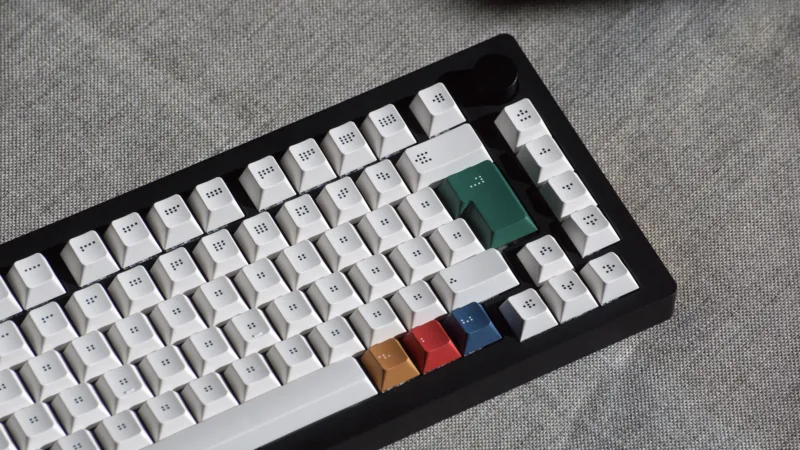
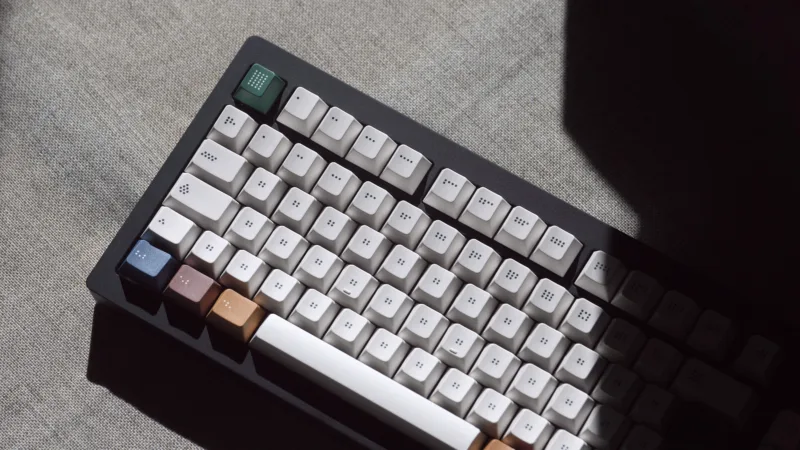
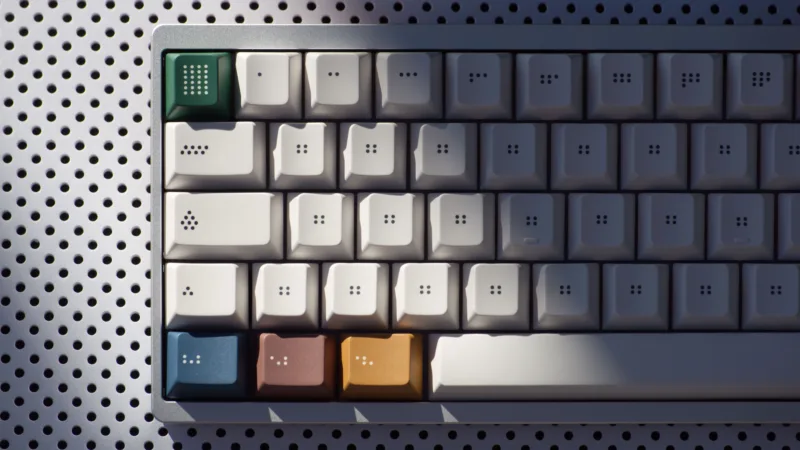


Where do punched cards and mécanographe come from?
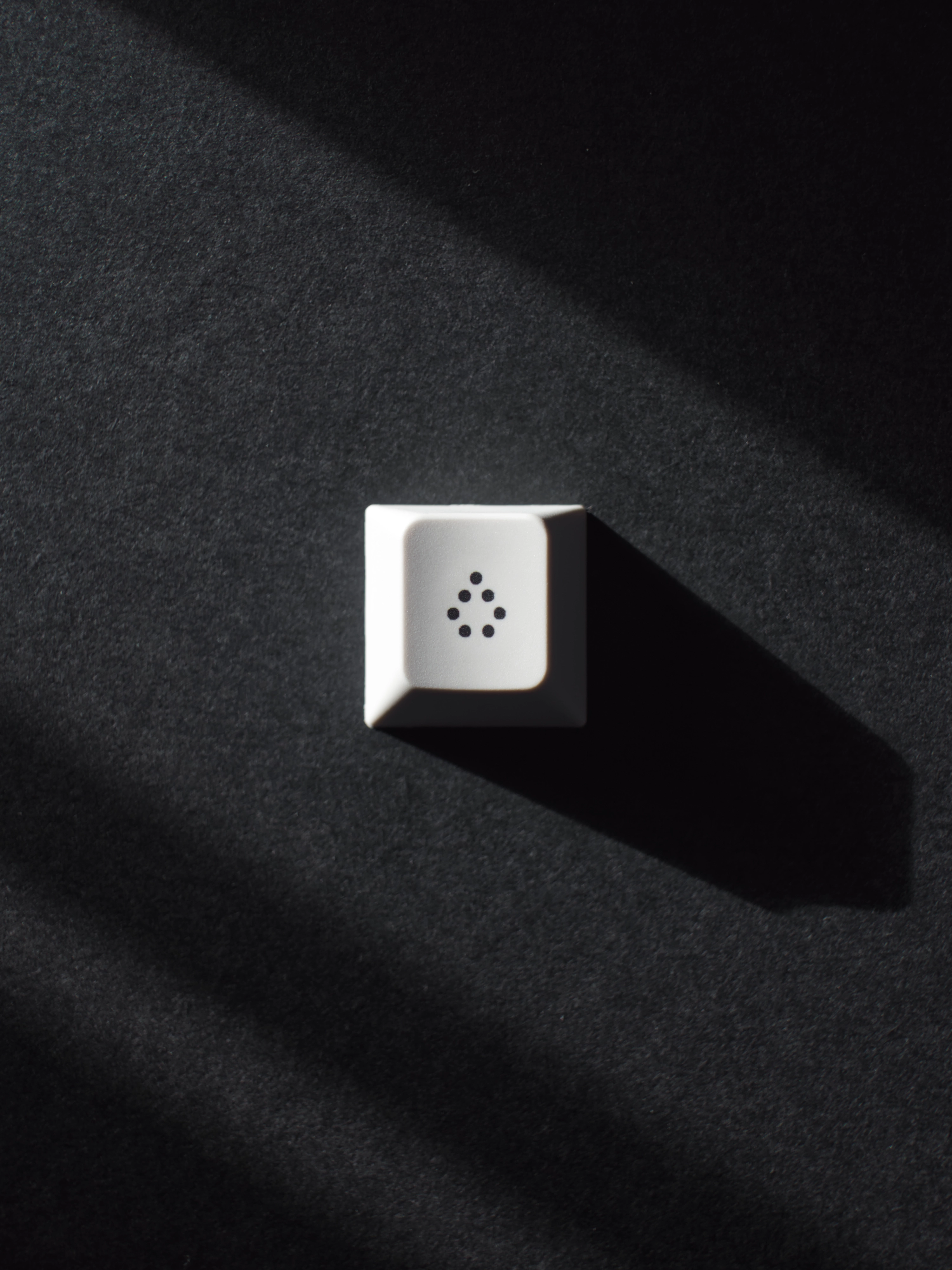
Punched cards first appeared in Lyon, not far from our production site, in the form of punched ribbons. In 1725, Basile Bouchon sought to automate the weaving industry. His work was later expanded by Joseph Jacquard, who developed a punched card system that, by 1801, was adopted worldwide. These humble pieces of cardboard, produced by a mécanographe, marked the beginning of an industrial revolution — enabling the precise programming and reproduction of complex weaving patterns.
An evolution in programming
In 1884, Herman Hollerith adapted punched cards to process data for the U.S. census, transforming them into an essential computing tool. He would go on to found the company now known as IBM. In 1928, IBM standardized the 80-column punched card format, which directly influenced the design of early computer screens displaying 80 characters per line. This legacy even contributed to the infamous Y2K bug, as programmers saved precious columns by storing years as two digits, writing “63” instead of “1963.”

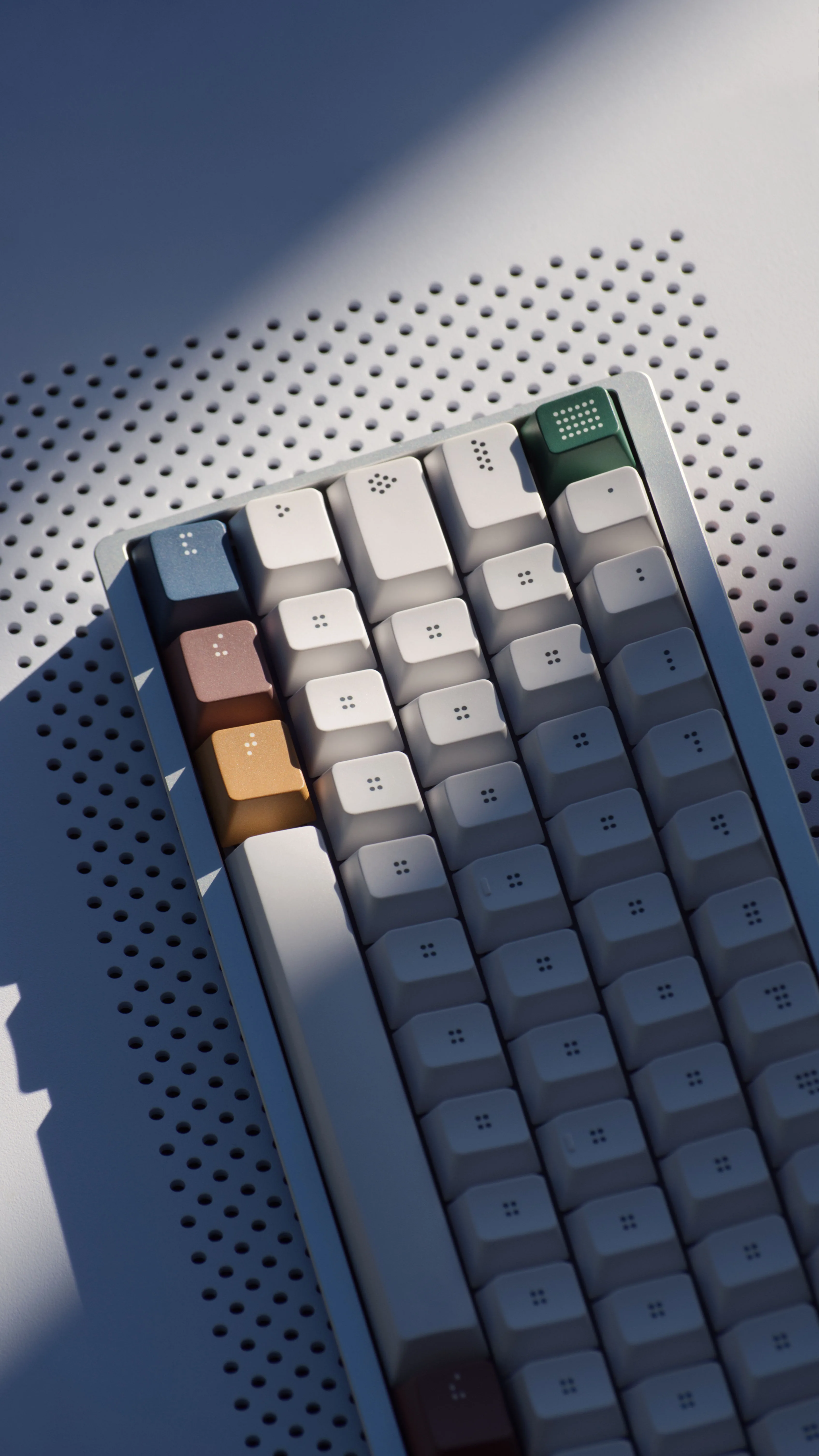
Today, punched cards are more than historical artifacts, they are a source of inspiration, blending technological heritage with modern design.

Characteristics of the set
A durable material
Unlike many other polymers, PBT plastic has the advantage of remaining matt over time despite regular contact with the skin. With a thickness of 1.5mm, our keycaps are designed to be acoustically pleasant and retain their original appearance for as long as possible.


A durable material
Unlike many other polymers, PBT plastic has the advantage of remaining matt over time despite regular contact with the skin. With a thickness of 1.5mm, our keycaps are designed to be acoustically pleasant and retain their original appearance for as long as possible.

5-sided sublimation printing
Colors and characters are marked using sublimation transfer. Developed in-house, this process enables us to produce your configuration on demand, while guaranteeing a long-lasting print.
MX-compatibility
The Cherry MX standard has undoubtedly become the most widespread reference for mechanical switches. By conforming to this standard, our keycaps can be quickly installed on the vast majority of mechanical keyboards, whether they come from mainstream brands or are a unique item.


MX-compatibility
The Cherry MX standard has undoubtedly become the most widespread reference for mechanical switches. By conforming to this standard, our keycaps can be quickly installed on the vast majority of mechanical keyboards, whether they come from mainstream brands or are a unique item.

Cherry profile
Our keycaps are sculpted in the Cherry profile, a timeless classic. Slightly inclined and of medium height, it adds a touch of elegance and comfort, regardless of your use.
A box with a purpose
Like our keycaps, our packaging is designed to be durable and long-lasting. When the time eventually comes to switch from one keyboard format to another, your remaining keycaps will be waiting for you, carefully protected and intuitively placed in their foams.


A box with a purpose
Like our keycaps, our packaging is designed to be durable and long-lasting. When the time eventually comes to switch from one keyboard format to another, your remaining keycaps will be waiting for you, carefully protected and intuitively placed in their foams.
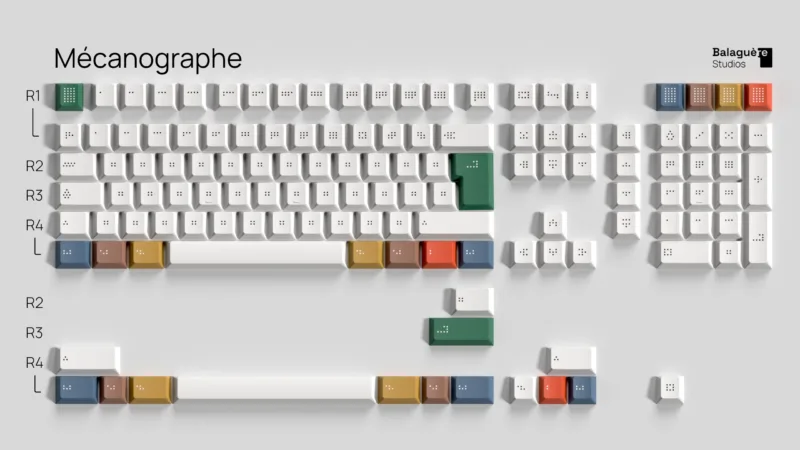
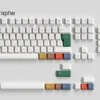
Keycaps set layout
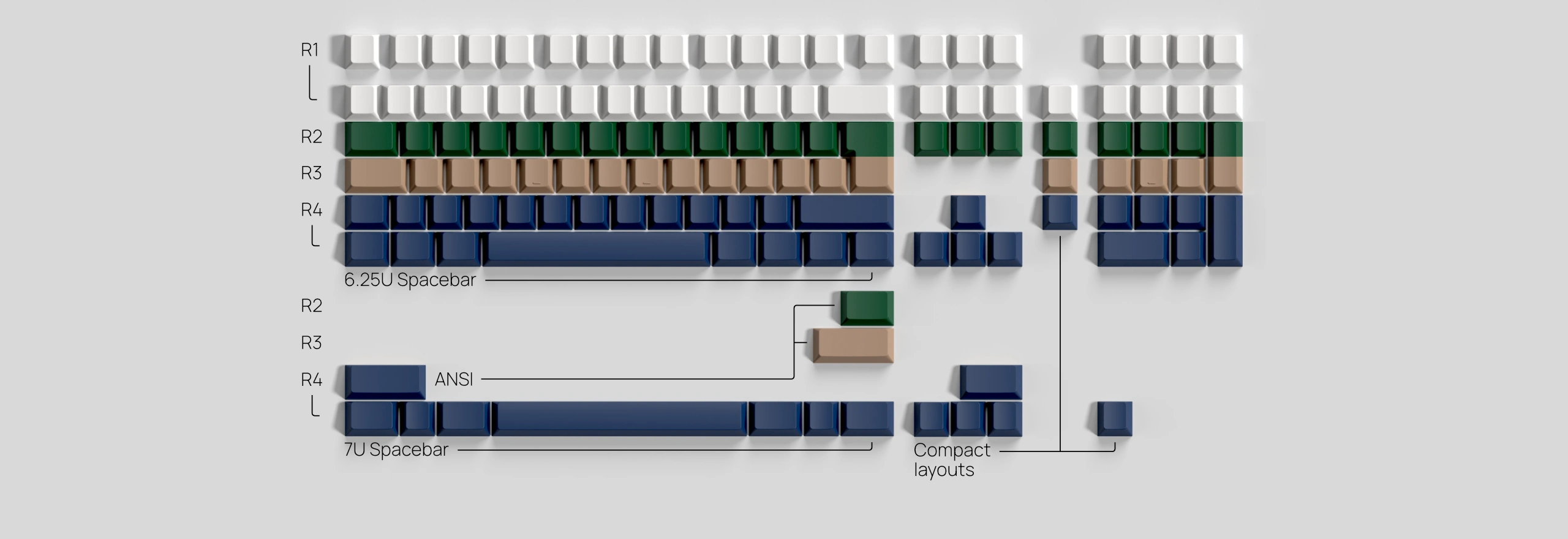
If some of the diagram’s elements seem obscure, don’t worry!
Our guides to keycaps properties and language arrangements are here to support you.